
The Benefits of Dogs for People Living with a Dementia
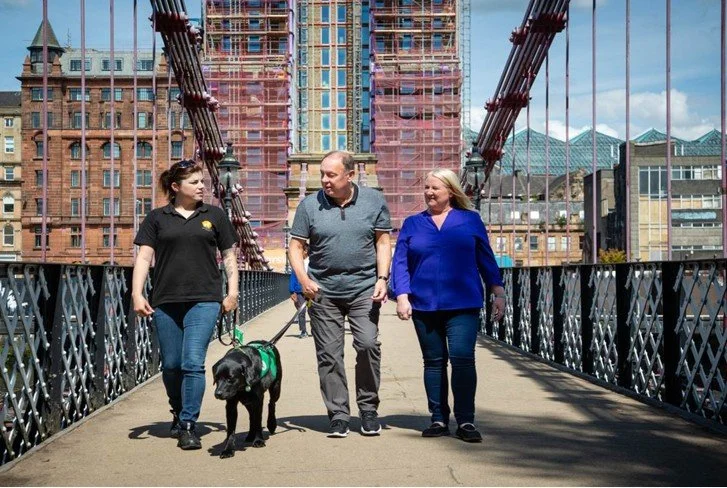
Dogs have long been cherished companions, but for people living with a dementia, their impact can be far deeper than simple friendship. At Dogs for Good we harness the unique abilities of trained dogs to support cognitive, emotional, and social wellbeing for people affected by a dementia across the UK.
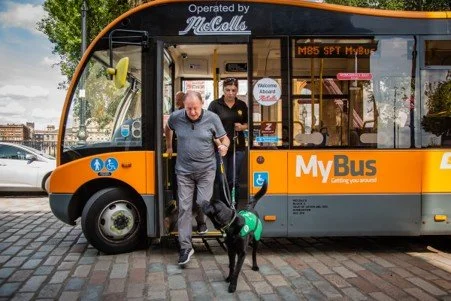
At the heart of it Dogs for Good (and our Dementia Dog partners Alzheimer Scotland) believe that dogs can contribute to quality of life in multiple, tangible ways. Both our specially trained dogs and family pets can bring joy, confidence and practical support to individuals and families living with a dementia, helping them to maintain independence, structure and connection in everyday life.
One key benefit is the way dogs help establish routine and structure. For many people with a dementia, daily rhythms can become fragmented or confusing as memory changes progress. Dementia assistance dogs are trained to support routines such as waking up, prompting medication times, or signalling mealtimes, which can reinforce familiarity and stability throughout the day. These cues are invaluable in helping individuals orient to time and daily tasks.
Physical activity is another important advantage. Dogs naturally encourage movement through walks and play. This not only supports physical health but also boosts mental engagement. Walking a dog, even at a gentle pace, promotes mobility, fresh air, and meaningful activity, which many people living with a dementia may otherwise miss.
Perhaps most widely recognised are the emotional benefits that companionship with a dog can bring. Interacting with a dog has been shown to reduce stress, lower anxiety, and elevate mood through the release of “feel-good” hormones such as oxytocin. For people affected by a dementia, who may experience loneliness or frustration as communication abilities change, the non-judgmental presence of a dog offers comfort that transcends words.
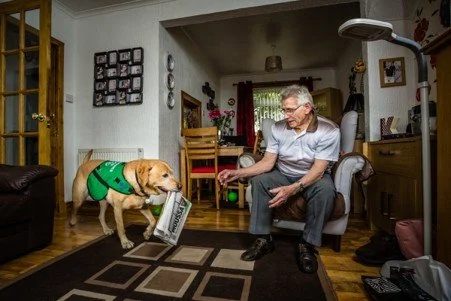
Dogs also serve as powerful social catalysts. Whether through intervention visits, or simple outings with a trained community dog, these interactions offer opportunities for connection with other people. Conversations sparked by a gentle, wagging companion can help reduce feelings of isolation and provide meaningful engagement with family, neighbours, or care staff.
The bond between person and dog can be deeply stabilising. Research by Jacki Gordon and Associates[1] and Ritchie et al [2], evaluating the Dementia Dog partnership, highlights that a strong, trusting relationship with a dog can improve communication, motivate engagement in activities, and even support mood regulation. For many families, this bond becomes a source of reassurance and connection for both the person living with a dementia and their carers.
Importantly, dogs can help with confidence and independence. Their presence can make it easier for people with a dementia to feel safe leaving the house, engaging in their community, or maintaining hobbies and social roles they value. This support helps individuals feel not defined by their diagnosis, but supported in their day-to-day life.
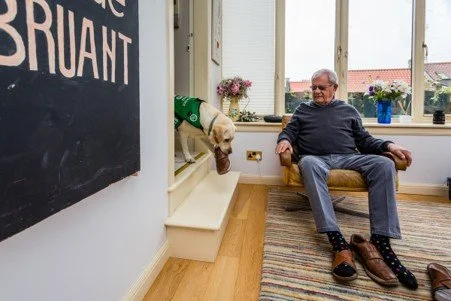
"I can’t wait to come here, it gets me out of the house. I didn’t do anything or go anywhere before. Now I wake up and keep checking my watch for when I can leave home to get to this group." (group participant)
In community settings, Dogs for Good are enhancing access to dogs through animal-assisted activities designed for people living with a dementia and their families. These goal-focused sessions, led by trained handlers and dogs, include a wide range of activities—from movement and speech support to mindfulness groups and even confidence-building for using public transport. The overarching aim is to foster motivation, connection, and wellbeing, showcasing the many ways dogs can enrich lives beyond traditional clinical environments.
Whether it’s a specially trained dog or a beloved family pet, the companionship of a dog is proved to be a powerful ally in dementia care.


For more information, visit the Community Dog website or Alzheimer Scotland.
References
[2] Ritchie L, Quinn S, Tolson D, Jenkins N, Sharp B. Exposing the mechanisms underlying successful animal-assisted interventions for people with dementia: A realistic evaluation of the Dementia Dog Project. Dementia (London). 2021 Jan;20(1):66-83. doi: 10.1177/1471301219864505. Epub 2019 Jul 23. PMID: 31335169.